Related News & Articles

PSORIASIS(KITIBHA)- INTRODUCTION,CAUSES, SYMPTOMS AND MANAGMENT Ayurveda
12.8K views

PSORIASIS(KITIBHA)- INTRODUCTION,CAUSES, SYMPTOMS AND MANAGMENT

BY SACNILK

INTRODUCTION-## Psoriasis in Ayurveda is well-known disease as “Kithibha” is an autoimmune disorder of the skin that causes plaques, which are itchy or sore patches of thick, red, dry skin. Scales regularly develop on joints, such elbows and knees.## They may grow anywhere on the body, including the: Hands Feet Neck Scalp Face## Psoriasis is a skin disease that causes skin cells to grow 10 times faster than average. This allows the skin to build up into bumpy red patches covered in white scales.Psoriasis cannot be transmitted from person to person. It occurs often in members of the same family.## Psoriasis typically occurs in early adulthood. Patches will recover and then come back all the way through a person’s life.## CAUSES-## As per Ayurveda causes of all varieties of skin diseases are common.Intake of mutually contradictory food like fish and milk, intake of unctuous and heavy drinks, suppression of natural urges like vomiting, sleep, thirst etc.## Physical exercise in excess heat climate or after taking heavy meal, violation of laws of Ayurveda in exposing to heat, cold, fasting and taking food.##  Intake of cold water immediately after exposing to scorching sun.  Intake of uncooked food and food before the previous meal is digested. Violation of laws of pañcakarma (5 purification procedures).##  Excess intake of foods like fresh grains, curd, fish, salt and sour substances; excess intake of black gram, radish, pastry, sesame seeds, milk, jaggery;  Sexual act in the state of indigestion; day sleep, performing sinful acts.## Symptoms for Psoriasis## Symptoms of Psoriasis differ from person to person which depends on the type of Psoriasis. The most common symptoms of Psoriasis include:-## Inflamed patches of skin Plaques on the red patches Dry skin that may crack and bleed Soreness around patches Itching/burning sensations around patches Thick/pitted nails Swollen joints Stress – Unusual high stress may trigger a flare-up. Heavy alcohol also triggers flare-up.## Ayurveda Management for Psoriasis## The vata mainly causes pain, dryness and scaling of skin. Pitha vitiation leads to burning feeling, redness, inflammation etc. and that of kapha causes rashes, itching, discharge, thickening of skin etc. From these symptoms, the involvement of Dosha is analysed carefully in each patient, which is most important in the management of the disease.## Shodhana chikitsa (Detoxification) can be done through Panchakarma therapies like Vamana, Virechana, Rakta mokshna etc., for chronic cases of 5 plus years of psoriasis  repeated detox may be advised## Shamana chikitsa through proper management of internal medication and external applications## Rasayana chikitsa (immunomodulation) to arrest recurring and boost immunity## Changes in diet and lifestyle## Management of Stress## Steps for psoriasis treatment in Ayurveda## Step 1: First of all, blood purifiers are given to the patients to reduce increased toxins inside the body.## Step 2: Secondly, emphasis moves toward liver care. Detoxification of liver is done through various therapies like Vamana / Virechana which in turn improves the immunity of the body.## Step 3: Wrong anti-biotics & anti-histamines are avoided with the help of herbal natural medicines so as to avoid their side effects on various parts of our body. Deep Ayurveda has its effective herbal medicines which performs the same task as done by anti-biotics & anti-histamines without having any side effects like Gandak Rasayan, Panchtikt Ghrit Guggul, Chander Prabha Vati etc.## Step 4: Various herbal medicated oils & formulations have been prepared for traditional ayurvedic treatment at our all clinic having almost all the benefits like anti-allergic, anti-fungal, anti-bacterial & anti-biotics.## Step 5: Rejuvenation of cells is done through immune boosters & modulator herbs like Amla, Ashwagandha, Shatavari, Brahmi etc. Ayurvit Multivitamin Herbal capsules is the medicine available at Deep ayurveda for this purpose.## Step 6: At last, Ayurveda emphasizes on the proper rejuvenation, relaxation & toning of nervous system through various neuro-tonic herbs like Brahmi, Shankhpushpi, Jatamansi, Tagar, etc.## Ayurvedic remedies for Psoriasis## Jasmine flower paste to get rid of itching and reduce inflammation In order to reduce inflammation Guggul can be used. Neem to boost the immunity levels and to purify the blood in the body. To reduce inflammation, redness, and swelling turmeric can be used. Boswellia (Indian frankincense) to reduce inflammation and increase the immunity levels of the body.## Pathya (Do’s):—## Lifestyle improvements, including daily exercise, healthier food. Losing weight to help keep hormones in check Yoga Meditation: Pranayama, breathing exercises Old rice, barley, green gram, bitter vegetables, and meat from wild animals are good. Apathya (Don’t):- Smoking Junk, sticky, packaged, preserved food or coffee beverages Sour, salty, heat-producing items like pepper, etc- curd, milk, jaggery, the meat of marshy animals, sesame seeds, black gram are contraindicated Sexual intimacy and alcoholic liquor should be prohibited. Sedentary lifestyles Excess sleep for the day, eating straight after dinner. Evite stress

WARTS-CAUSES, SYMPTOMS AND MANAGMENT ACCORDING TO AYURVEDA AND  MODERN SCIENCE Ayurveda
15.2K views

WARTS-CAUSES, SYMPTOMS AND MANAGMENT ACCORDING TO AYURVEDA AND MODERN SCIENCE

BY SACNILK

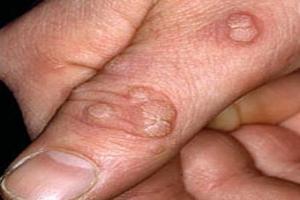
Warts are growths on the skin caused due to infection with human papilloma virus (HPV).Most HPV types cause relatively less harmful conditions like common warts, but some can cause cause serious disease such as cancer of the cervix.## In Ayurveda, warts can be compared with Charmakeela. The pathogenesis of this disease due to vitiation of Vata along with Kapha over the skin causes the development of hard nail structures called Charmakeela.##The incidence of warts is highest in children and young adults.## In Ayurveda, the features are described on the basis of domination of the Doshas.## 1. In Vata dominated Charmakeela- patient feels pricking type of pain,## 2. in Kapha domination it appears like nodule without changing the color of the skin, ## 3. in Pitta dominated Charmakeela due to vitiation of Rakta (blood), it appears blackish in color, dry, oily and hard in nature.## According to modern science, different types of warts have been identified, which are differing in shape and site, as well as the type of human papillomavirus involved. These include:- ## 1.Common wart (verruca vulgaris): A raised wart with roughened surface, most common on hands and knees## 2. 2. Flat wart (verruca plana): A small, smooth flattened wart, tan or flesh colored, which can occur in large numbers; most common on the face, neck, hands, wrists and knees.## 3.Filiform or digitate wart: A thread or finger-like wart, most common on the face, especially near the eyelids and lips.## 4. Plantar wart (verruca, verruca pedis): A hard sometimes painful lump, often with multiple black specks in the center; usually only found on pressure points on the soles of the feet.## 5. Mosaic wart: A group of tightly clustered plantar-type warts, commonly on the hands or soles of the feet.## 6. Genital wart (venereal wart, condyloma acuminatum, verruca acuminata): Wart affecting the genital areas.## The management of warts- ## The management of warts depends on the age of the patient, the site of infection, the size, number and types of warts involved, the patient's immunological status, treatment availability and cost, and the patient's desire for therapy and ability to adhere to the treatment regimen. For children, it is desirous to have an effective and painless treatment that shows rapid results.## According to allopathy, the management consists mainly in destroying the warts by different methods like chemically, electrically or surgically and these can be achieved by cryosurgery, keratolytic ointments, plasters and solutions, curettage, electrodesiccation, and destructive acids.## In Ayurveda, it was described that the attainment of total management by using the internal drugs, external applications and Kshrakarma and Agnikarma.## I.Lekhana karma (scraping procedure)-Stalks of the betel leaf, mixture of lime + copper sulfate in equal quantity.## II.Application of the Kshara Jala (alkali lotion)Paste of the Changeri leaves-rubbing## III.Thermal cauterization (Agnikarma) – After infiltrating the L.A at base, the warts can be excised by red hot Shalaka (pointed metallic rod) or electro cautery.## IV.Ligation of the horse hair or Kshara sutra – Horse hair or Kshara sutra should be tied after applying around the base of wart.## Internal medications like Arogyavardhini, Manjishthadi kwatha, Vatari gugglu (internal medicines are having limited role and may help in preventing recurrence after excision of the warts).                                                                                  

DADRU KUSTHA(TINEA INFECTION)-INTRODUCTION,CAUSES,SYMPTOMS AND MANAGMENT Ayurveda
14.9K views

DADRU KUSTHA(TINEA INFECTION)-INTRODUCTION,CAUSES,SYMPTOMS AND MANAGMENT

BY SACNILK

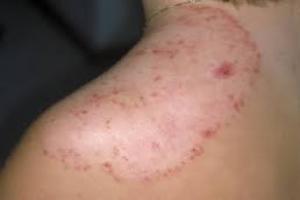
INTRODUCTION-## Dadru is one of the common skin diseases mentioned in Ayurveda. In modern science, the clinical manifestation of dadru is closely similar to local fungal infection/tinea infection which is affecting upto 15% of the population. All the skin diseases in Ayurveda have been classified under the broad heading of “kushtha” which are further categorized in to mahakushtha & kashudrakushtha. Aacharya Charaka mentioned dadru in kashudrakushtha, and Aacharya Shushruta has mentioned dadru kushtha in mahakushtha. According to most of ayurvedic texts, all types of Kushtha have been considered as Rakta Doshaja vikara. Dadru is one of the kapha-pitta pradhana twak vikara.## CAUSES OF DADRU -## It is Raktapradoshaja vyadhi having kapha, pitta dominance. Due to similarity of all symptoms Dadru can be very well correlated with Tinea corporis which is a fungal infection especially caused due to poor hygienic conditions.## 1) Primary causes of Dadru(Fungal Infection of skin): As per ayurvedaAcharyas not explained separate nidana for dadru kushta. But dadru kushta spread person to person by malaja krimi through sweda (contact with infected person, contact with clothes of infected person etc.) Due to the sharing of towels, bed sheets, soap, handkerchief etc of infected person causes the spreading of micro-organism from one person to another person. Dadru which is likely similar to fungal infection of skin in which the fungal spore has been transferred from diseased person to healthy person by above given methods.## As per Modern- ringworm is a contagious fungal infection caused by moldlike parasites that live on the cells in the outer layer of your skin. it can be spread in the following ways:  human to human- ring worm often spread by direct, skin to skin contact with an infected person.  Animal to human- ring worm can spread by rubbing or grooming dogs and cats it is also fairly common in cows.  By touching objects-ring worm can spread by contact with objects or surfaces that an infected person or animal has recently touched or rubbed against, such as clothing, towel, bedding and linens, combs, and brushes.  From soil- if you’re working or standing barefoot in soil that’s infected with the fungus, that causes ringworm, we can get it. ## 2)Secondary causes of Dadru – secondary cause of fungal infection (dadru) has been divided either local or systemic in both ayurvedic and modern science.## SYMPTOMS-## Red scaly rash that is shaped like a ring (annular) Cracking, splitting and peeling in the toe web spaces. Blisters. Yellow or white discoloration of the nails. Bald spots on the scalp.## TREATMENT-## In Ayurveda Shodhan , Shaman chikitsa and local application of lepa. is mainly indicated in Kushtha.##  In dadru kushta virechana and raktmokshan should be given to remove out vitiated pitta and rakta.##   INTERNALLY-Arogyavardhini vati, Gandhak rasayan, Gomutra siddha haritaki Mangistha prwal pisti,kalmegh powder ## EXTERNALLY-  Karanj oil ,triphala kwath(wash) and skin powder## In modern science the most effective therapy is an antifungal drug

Scabies
Introduction, causes, symptoms and treatment Ayurveda
23.5K views

Scabies Introduction, causes, symptoms and treatment

BY SACNILK

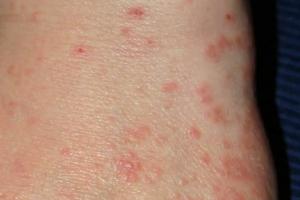
Introduction_in allopathic ## Scabies is an itchy, highly contagious skin disease.## Scabies isn’t a sexually transmitted disease, although it can be transmitted through intimate contact, sharing clothing, or sharing bedding.## Scabies infestation occurs worldwide and is very common.## Causes-## caused by a tiny burrowing mite called Sarcoptes scabiei. Mites are small eight-legged parasites (in contrast to insects, which have six legs). They are tiny, just 1/3 millimeter long, and burrow into the skin to produce intense itching, which tends to be worse at night. The mites that infest humans are female and are 0.3 mm-0.4 mm long; the males are about half this size. Scabies mites can be seen with a magnifying glass or microscope. The scabies mites crawl but are unable to fly or jump. They are immobile at temperatures below 20 C, although they may survive for prolonged periods at these temperatures.## Symptoms-## After the initial exposure to scabies, it can take 2 to 5 weeksTrusted Source for symptoms to appear. The symptoms usually develop more quickly in people who’ve had scabies before, often as soon as 1 to 4 daysTrusted Source after exposure.## symptoms of scabies include ## •Itching, often severe and usually worse at night •Thin, irregular burrow tracks made up of tiny blisters or bumps on your skin## scabies is most often found:## Between the fingers## In the armpits## Around the waist## Along the insides of the wrists## On the inner elbows## On the soles of the feet## Around the breasts## Around the male genital area## On the buttocks## On the knees## In infants and young children, common sites of infestation usually include the:## Scalp, Palms of the hands, Soles of the feet. Treatment- ## Medications and self-care## IN AYURVEDA-According to Ayurveda Scabies can be correlated to Pama.## Pama is caused due to aggravation of Kapha in association with indigestion and Pitta. Types## 1)Dry scabies – It is commonly found in the anal orifice, over the scrotal skin and over the nipples.## 2)Pustular scabies – Starts in the finger webs and later spreads to other skin folds. Pus is also filled in the blisters, gradually.## Treatment- ## The main aim of treatment will be## To purify the blood and bring out the toxins from the blood stream, Locally to pacify the symptoms like itching and blisters ✓Ayurvedic medicines for scabies: ## Gandhaka rasayana – It is used in the treatment of skin diseases, itching, chronic fever, urinary tract disorders etc.## Arogyavardhini vati – It is used in the treatment of liver diseases, fever, skin diseases, etc.## Mahamanjishtadi kashaya – used in the treatment of skin diseases, gout, syphilis, non healing wounds.## Khadirarishta – used for treating wide range of skin disorders## Mahatiktaka kashaya – used for treating infectious skin diseases, abscess, non healing wounds and sinuses.## Rasamanikya – used for treating fever, bronchitis, Asthma and skin diseases Aragwadhadi kashaya ##

IMPETIGO
ACCORDING TO ALLOPATHY AND AYURVEDA(INTRODUCTION,CAUSES,SIGN & SYMPTOMS AND TREATMENT) Health
14.9K views

IMPETIGO ACCORDING TO ALLOPATHY AND AYURVEDA(INTRODUCTION,CAUSES,SIGN & SYMPTOMS AND TREATMENT)

BY SACNILK

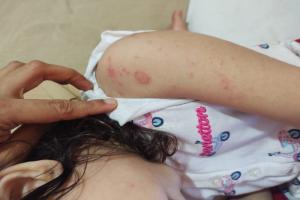
ACCORDING TO ALLOPATHY-(INTRODUCTION,CAUSES, SIGN & SYMPTOMS AND TREATMENT)## INTRODUCTION-## According to modern, A highly contagious skin infection that causes red sores mainly on the face,due to which skin problem starts like infection or wound. This infection can also spread to any part of the body. Yellow or dark fluid may comes out from these wounds.## It's a skin infection caused by a bacteria, and it spreads easily. It's most common in babies and young children, but adults can get it too.## CAUSES-## According to modern, most impetigo is caused by Staphylococcus aureus bacteria. The infection isn’t usually serious, but sometimes complications may develop.## SIGN AND SYMPTOMS-## The following are common symptoms and signs of impetigo## Rash on the skin Itching due to rash or wound. Feeling pain sometimes. Inflammation in areas with infection. In addition to these symptoms, there may be other symptoms.## TREATMENT- Conservative tratment## ACCORDING TO AYURVEDA- (INTRODUCTION,CAUSES,SIGN & SYMPTOMS AND TREATMENT)## According to ayurveda, it is a type of raktaja sukshma krimi related disease. It is non bullous type of impetigo comes under oupasargika roga.there is kapha-pitta samsarga in most of the lesions raga and paka are the main features of pitta dosha.## This infection is most prevalent in hot humid season of the year and more commonly affect infants## SIGN & SYMPTOMS-## Impetigo presented with clinical symptoms like appearance of bullae over the skin which may gets ruptured after 4 to 5 days with discharge of slightly turbid fluid and leaves backs an erythematous superficial ulcer. Subsequently there was appearance of multiple bullae in other parts of the body with same progression. Based on the clinical presentation of the disease and Dosha the disease is diagnosed as Charmadala Kusta with involvement of Twaka and Masa Dhatu, Raktavaha Srotus and treated as per Ayurvedic guidelines.## TREATMENT-## Kapha-Pittahara chikitsa is mainly given.sometimes there will be a aashukari state of the disease due to pitta-rakta releted bala samprapti.here krimighna chikitsa should be administered.bahiparimajana chikitsa is important as the disease belongs to oupasargika roga. -Patient will be treated with internal medication like Triphla Guggulu, Gandhaka Rasayan, Patola KatukaRohiniaadi Kshaya in required doses for 15 days along with Sphtika bhasma, Tankana bhasma, Godanti bhasma, Prawal bhasma Giloy satv, Shukta Pishti, Kamdudha Ras, tal sindor,akik pisti and for local applications Twak Tailam, Panchatikta Ghrita Guggulu etc. can also be used in calculated doses. Patients is advised to bath with Nimbha Patra Kashaya. It is also adviced in breast feeding mother to take certain Sthanya Shodaka Drugs like Patha to nullify remote chances of feeding the vitiated breast milk.

ECZEMA-INTRODUCTION,SIGN&SYMPTOMS,TREATMENT AND HOME REMEDIES Ayurveda
13.4K views

ECZEMA-INTRODUCTION,SIGN&SYMPTOMS,TREATMENT AND HOME REMEDIES

BY SACNILK

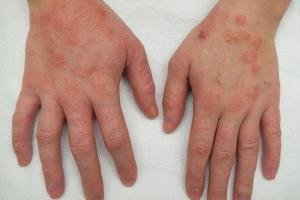
Eczema is termed “the itch that rashes,” since scratching normally precedes the rash.it is also called atopic dermatitis.## As per Ayurveda eczema, it can be broadly associated with vicharchika.An itchy inflammation of the skin.Atopic dermatitis usually develops in early childhood and is more common in people who have a family history of the condition.## According to charak samhita it is a condition where the skin has red rashes,with bumps,associated with profuse discharge,intense itching and often blue discoloration.some other also notify painful,dry and mild to moderate itching lesions.explantions of blackish lesions with severe itching and watery discharge over the skin are also available in classical versions.## Eczema affects males and females equally and is more common in people who have a personal or family history of asthma, environmental allergies and/or food allergies. It typically starts during infancy or early childhood and can persist into adulthood. However, eczema can occur in people of any age.Eczema doesn’t harm your body. It doesn’t mean that your skin is dirty or infected, and it’s not contagious.## Atopic dermatitis is the most severe and chronic (long-lasting) form of eczema. It's characterized by inflamed skin that may crack and release a clear fluid when scratched (an effect known as weeping).## CAUSES-##The cause of eczema is unknown. It is likely caused by both genetic and environmental factors. it’s triggered by an overactive immune system.Eczema (atopic dermatitis) is caused by a combination of immune system activation, genetics, environmental triggers and stress. Your immune system. If you have eczema, your immune system overreacts to small irritants or allergens. This overreaction can inflame your skin.## Eczema triggers- An eczema flare-up happens when one or more eczema symptoms appear on the skin. According to the National Health Service (NHS), research has shown that external and internal factors can contribute to flares of eczema. Common triggers include:## chemicals or preservatives found in cleansers and detergents scented products cigarette smoke external allergens such as pollens, mold, dust, or dust mites rough scratchy material, like wool synthetic fabrics sweating temperature changes stress food allergies animal dander upper respiratory infections## SIGN&SYMPTOMS-## The first signs of eczema are itchiness and redness.## The main symptom of eczema is itchy, dry, rough, flaky, inflamed, and irritated skin.## Eczema can show up anywhere on your skin. In teens and adults, it’s typically found on your hands, neck, inner elbows, ankles, knees, feet and around your eyes.## It can flare up, subside, and then flare up again.## Other symptoms include:-## intense itching## red or brownish-gray patches## small, raised bumps that ooze fluid when scratched## crusty patches of dried yellowish ooze, which can signal infection## thickened, scaly skin## sore or raw-feeling skin## Many people find their symptoms get worse at night, making it difficult to sleep. Scratching eczema further irritates and inflames the skin. This can cause infections that must be treated with antibiotics.## Sometimes, mild eczema can be managed at home by avoiding triggers and keeping skin moisturized. However, it’s best to see a doctor when symptoms are hard to manage or are getting worse. It’s a good idea to make a medical appointment if your:## eczema isn’t responding to over-the-counter treatments## symptoms are keeping you awake at night## symptoms are making it hard to complete everyday tasks## skin is blistering or weeping fluids## skin is peeling## skin is getting thick or scaly## TEST-## There’s no specific test that can be used to diagnose eczema. Often, a doctor can diagnose the condition by talking with you about your symptoms and examining your skin. Sometimes, a patch test might be done to help find eczema triggers.## A patch test can pinpoint certain allergens that trigger symptoms, like skin allergies associated with contact dermatitis## Pathya (Do’s):-## Lifestyle changes, including daily exercise, a balanced diet. Losing weight to help keep hormones in check Meditation on Yoga Pranayama, breathing exercises Maintaining cleanliness Old rice, barley, green gram, bitter vegetables, and meat from wild animals are good.## Apathya (Don’ts):-## Smoking junk, sticky, packed, stored food or coffee beverages. Sour, salty, heat-producing things such as pepper etc-curd, milk, jaggery, meat of marshy animals, sesame seeds, black gram are contraindicated. Sexual intimacy and alcoholic liquor should be prohibited. Sedentary lifestyles Excess sleep for the day, eating straight after dinner.## TREATMENT-## In ayurveda eczema is mainly treated with Panchakarma therapy.## Treatments may include medicines, skin creams, light therapy, and good skin care. ## There are treatments that can help manage your symptoms.## Oral over-the-counter (OTC) antihistamines can relieve itching. They work by blocking allergic reactions triggered by histamine.## Cortisone (steroid) creams and ointments can relieve itching and scaling.## Home remedies -## Home remedies and natural treatments can soothe the dry, itching skin that accompanies eczema. People can use creams, natural products, and dietary and lifestyle changes to manage or prevent eczema flares, especially in the winter, when symptoms tend to be at their worst.## Natural substances, such as aloevera gel and coconut oil, can moisturize dry, broken skin. They can also combat inflammation and harmful bacteria to reduce swelling and prevent infection.## Aloe vera gel-The antibacterial and antimicrobial effects can prevent skin infections, which are more likely to occur when a person has dry, cracked skin. Aloe’s wound-healing properties may soothe broken skin and promote healing.## Natural remedies cannot cure eczema, but they can help manage the symptoms and prevent flares. This article explores the best natural remedies for eczema.

Previous Page 2 of 2 Next